Istanbul
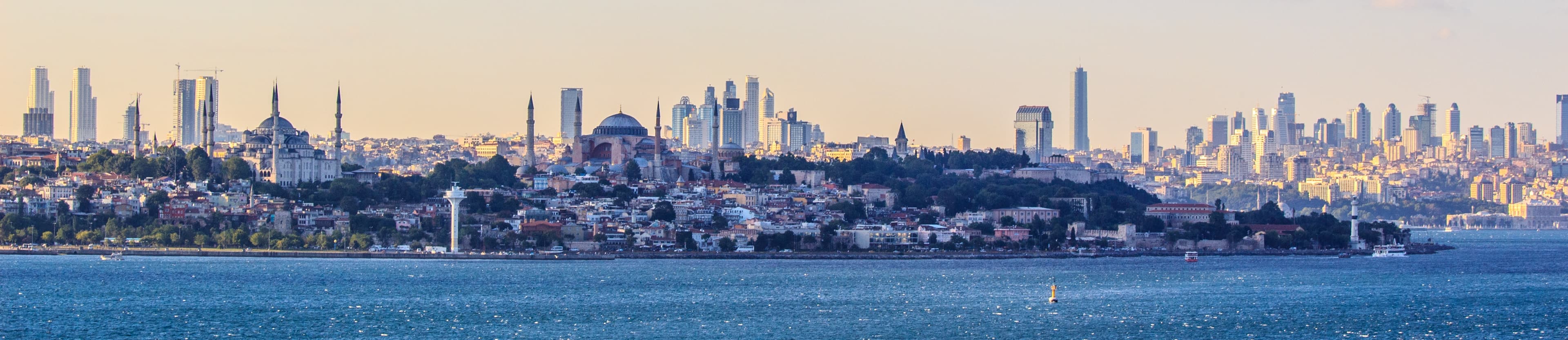
Istanbul offers an extraordinary tapestry of global tourism experiences spanning six primary domains: Classic Heritage, Health & Medical Tourism, Study & Education, World-Class Gastronomy, Wellness & Historic Hammams, and Outdoor Adventure. Home to UNESCO World Heritage zones across its Historical Peninsula, the city dazzles visitors with imperial monuments such as Hagia Sophia, Topkapı Palace, an
 www.allturkiye.com
Photo via Wikimedia Commons, CC BY-SA 2.0
Districts
- Adalar
- Arnavutköy
- Ataşehir
- Avcılar
- Bağcılar
- Bahçelievler
- Bakırköy
- Başakşehir
- Bayrampaşa
- Beşiktaş
- Beykoz
- Beylikdüzü
- Beyoğlu
- Büyükçekmece
- Çatalca
- Çekmeköy
- Esenler
- Esenyurt
- Eyüpsultan
- Fatih
- Gaziosmanpaşa
- Güngören
- Kadıköy
- Kağıthane
- Kartal
- Küçükçekmece
- Maltepe
- Pendik
- Sancaktepe
- Sarıyer
- Silivri
- Sultanbeyli
- Sultangazi
- Şile
- Şişli
- Tuzla
- Ümraniye
- Üsküdar
- Zeytinburnu
Experiences
Investment outlook
As Türkiye's economic, financial, and industrial locomotive, Istanbul generates over 30% of the national GDP and handles more than 40% of the country's foreign trade volume. The city holds a transparent investment score of 93.8/100, driven by immense infrastructure megaprojects, a population of over 15.8 million residents, and premier corporate financial centers like the Istanbul Financial Center in Ataşehir. Real estate market fundamentals remain exceptionally buoyant, yielding strong USD rental returns driven by international tourism, medical travel, and global corporate headquarters.
Living here
Living in Istanbul is an invigorating experience inside a vibrant global metropolis where ancient tradition meets modern cosmopolitan energy. Across its 39 diverse districts, Istanbul offers distinct lifestyle characters, from the bohemian, high-walkability coastal enclaves of Kadıköy and Beyoğlu to the ultra-luxury Bosphorus avenues of Beşiktaş and Sarıyer, and family-oriented green suburbs in Başakşehir and Beylikdüzü. Residents benefit from a world-class public transportation web, extensive university networks, international K-12 schooling, and comprehensive healthcare access.
History & cultural identity
Istanbul is a transcontinental megacity defined by its unique geographical positioning bridging Europe and Asia across the Bosphorus Strait. Founded in 667 BC as Byzantium by Megarian Greek settlers, the city was selected in 330 AD by Emperor Constantine the Great as the new imperial capital of the Roman Empire, renamed Constantinople. For over 1,100 years, it stood as the heart of the Byzantine Empire before its historic conquest in 1453 by Sultan Mehmed II. Serving as the capital of the Ottoman Empire for nearly 500 years until the founding of the modern Republic of Türkiye in 1923, Istanbul represents an unparalleled 2,700-year legacy as the historic seat of three world-spanning empires.
Frequently asked questions
What are the primary historical layers of Istanbul?+
Istanbul served as the imperial capital for three major world empires: the Roman Empire, the Byzantine Empire, and the Ottoman Empire, before becoming Türkiye's premier economic and cultural metropolis.
How many districts make up the province of Istanbul?+
Istanbul comprises 39 administrative districts, with 25 located on the European side and 14 located on the Asian side of the Bosphorus Strait.
What makes Istanbul an attractive destination for global investors?+
Istanbul accounts for over 30% of Türkiye's GDP, housing major financial hubs, world-class infrastructure, high real estate liquidity, and year-round medical and leisure tourism demand.